

In recent years, professionals who offer couples therapy in Virginia Beach have seen a trend: political polarization has crept from the news into the home, even for strong, long-term relationships. It is increasingly common to see even beloved family members and partners distancing themselves due to ideological divides. If your relationship is feeling these effects, you may not know what to do next.
The good news is that maintaining closeness with the people you love is still possible, even if your political views differ. It may take effort and intention, but by learning some essential skills, you can manage your relationships even when you may disagree. Here are the best places to start.
Why Political Division is So Emotionally Insidious
Many people wonder why politics has surged as a source of conflict in relationships. Personal opinions notwithstanding, the rise of social media is a significant contributor. Platforms amplify opinions and share headlines that are designed to provoke outrage (and therefore engagement, which means profit).
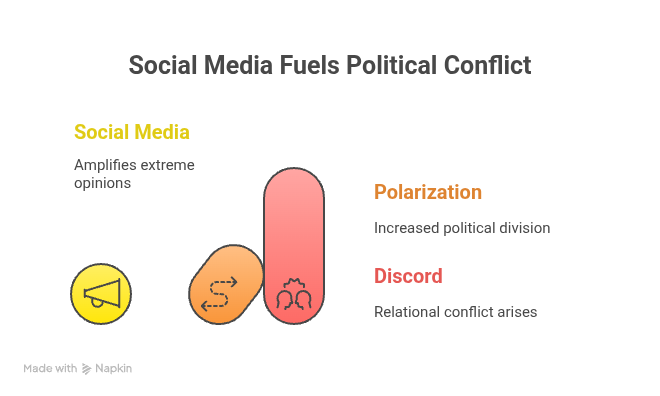
This shift has contributed to increasing tension within relationships. Partners may feel unheard, misunderstood, judged, or frustrated, and the heightened sensitivity from these emotions can lead to hair-trigger reactions to conversations that were formerly harmless. The resulting stress may lead to emotional withdrawal and possibly even resentment, which is one of the primary contributors to long-term relationship difficulties.
Political divides are so insidious because they attack, by proxy, a person’s most basic emotional needs: belonging, safety, and identity. These aspects should be strong and supported in a relationship, which can lead to feelings of betrayal, fear, or attack from someone you love.
Strategies for Staying Connected
If your relationship is experiencing prolonged disagreements over political views, this does not mean that you are incompatible. Instead, you should dedicate intentional focus on the divide to come out stronger on the other side.
Prioritize the Relationship Over the Debate
Before you begin to argue your point during a disagreement, think about what you want to achieve. Do you want to convince your partner that you are “right”? Attempting to argue to win is often an exercise in futility that sows division and frustration. Instead, focus on connection and mutual respect, knowing that two people may not agree on everything, and that is normal.
Set Clear Boundaries

A boundary is a decision you make on how to respond to certain situations. When it comes to politics, common boundaries include “I will not discuss this topic with you at home” or “I will use the word ‘banana’ and leave the conversation briefly to calm down when I get upset.” This helps to safeguard both emotional security and respect.
Listen to Understand, Not to Respond
Have you ever been so focused on how you wanted to strike back during an argument that you forgot to listen to what the person continued to say? This is reactive listening. Consider, instead, active listening, which prioritizes realizing where the other person is coming from and repeating what you hear to help your partner feel seen and prevent an erosion of respect.
Find Common Ground
Many political beliefs feel polarizing, but beneath the surface, some common ground exists. You may both find unity in certain beliefs about community, kindness, or identity, even if those values are expressed differently in practice. Reconnect in the areas where you are united.
Take Breaks When Needed
Political views can lead to heightened emotional responses. When you feel yourself getting worked up, it is wise to say directly, “I need a break, but I still care about what you’re saying.” This can kill unwanted escalation without shutting the other person down.
How Therapy Can Help

While partners can often find common ground on issues, some disagreements center on political views that seem irreconcilable: entire worldviews, life goals, and more. Rest assured that relationships can still survive these challenges, but they may benefit from outside help. A skilled therapist can help couples and families learn the tools they need to succeed. Some of the most important are:
- Emotional awareness – If a person is unaware of why they are becoming upset (or why their loved ones are), they may not be able to enter the conversation in a beneficial way. An experienced therapist in Virginia Beach can teach you how to name and feel your emotions.
- Communication – Some methods of communication can sow division, while others can bridge divides. Consider the difference between “I can’t believe you would think that” and “I don’t understand your position right now, but I want to try.” Therapy is a great place to practice good communication skills and learn new strategies.
- Conflict resolution – When conflict arises, some couples struggle to recover. Therapy can help you learn conflict-resolution skills, such as brief disengagement, reframing, and coping mechanisms, to heighten empathy and diffuse tension.
Start Couples Therapy in Virginia Beach Today
Is your relationship struggling to maintain connection during shifting news cycles? Contact Village Counseling to schedule therapy. Couples therapy in Virginia Beach can help you bridge the gap in your bond, even if your political views differ.