

Anyone of any age, gender, or orientation may experience mental health struggles, but for queer teens, challenges often come frequently. The LGBTQ+ community commonly finds itself on the receiving end of discrimination, harassment, and sometimes, even physical violence. As a result, many young people may slip into depression, anxiety, and other forms of mental and emotional disruption.
The good news is that numerous tools are available to help queer teens overcome the difficulties they encounter. These go beyond mere platitudes; they are active, practical changes you can make to improve your mental health and remain resilient, even when problems arise. Here are some effective mental health tools queer teens can actually use when things get rough.
Queer Teens and Mental Health: The Data
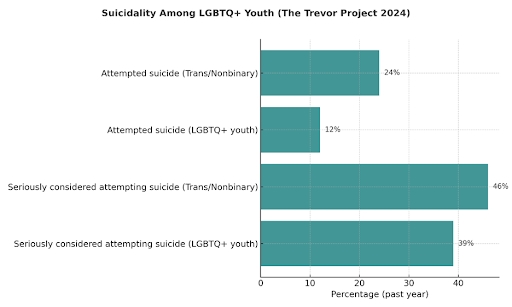
If you or someone you love is struggling with their mental health due to their personal identity, understand that this issue is not uncommon. In fact, queer teens are more likely to suffer from symptoms of mental unwellness and emotional upset than their cisgender, heterosexual peers.
A survey conducted by The Trevor Project shows that, on average, trans and nonbinary teens represent the highest level of struggle, but not by much; other queer identities, such as gay and bigender, follow close behind.
Mental Health Tools Queer Teens Can Actually Use
These persistent problems in LGBTQ+ teens are not something that families must struggle with. By taking full advantage of mental health tools, queer teens can gain the upper hand on encroaching negative feelings and the backlash they may receive from society, peers, and family.
Mindfulness
In many cases, strong emotional responses (e.g., stress) can arise because the mind develops cyclical thinking from which it is difficult to escape. Mindfulness is one method of interrupting this process and preserving your mental health, especially when you are spiraling.
Mindfulness means bringing yourself back to the present moment, moving from your thoughts to your body. You may take deep breaths, feeling how they pass into your lungs and energize your body. You might look for five things you can see, four you can touch, three you can hear, two you can smell, and one you can taste in the space around you. This 5, 4, 3, 2, 1 Grounding Exercise grounds your body in the present, halting the spiraling process.
Self-Affirmation

The person who has the most to say about your body and identity is you, and that is where you will hear most of the commentary about your queer identity. Make sure that it is affirming.
Self-affirmation can reduce stress and help you find confidence, pride, and passion for your own nature. Try starting the day by finding one thing about yourself that excites you.
Affirming Communities
Mental health problems are more common in queer teens who have no safe spaces to which they may retreat. Affirming communities, whether online or in person, can provide a safe haven full of others who understand and resources to help you flourish.
The Trevor Project is a good place to start when looking for affirming communities. It can connect you with both online and in-person groups, which may then branch into private discussions and friendships.
Self-Care Routines
Self-care might be portrayed by the media as a spa day with chocolate and candles (and it can be!), but in many cases, self-care simply means taking intentional steps to preserve your well-being, both physical and mental. Create a schedule of consistent time for exercise, hobbies, or whatever is important to you. Place boundaries on problematic relationships. Sign up for consistent therapy so you always have a cathartic place for growth and acceptance.
What Does Affirming Therapy Look Like?

LGBTQ+ affirming therapy comes from mental health professionals who understand the particular challenges often experienced by the queer community. Cognitive behavioral therapy can help you reframe your thought patterns. You may learn to identify and name what you are feeling, altering how it impacts you to reduce stress and provide a more realistic, wholesome view of yourself.
You may also learn coping strategies to maintain your mental wellness during challenging times. Deep breathing, boundary-setting, journaling, and more are potential supports that can make you more resilient against bad actors who might threaten your mental state.
Safeguard Your Mental Health With Therapy
Therapy can be an invaluable tool for queer teens to overcome mental health struggles. It provides a safe, affirming place to dissect behaviors, thoughts, and patterns for long-term success. Because each queer teen has individual difficulties, the approach will be personalized to your specific goals and vulnerabilities.The LGBTQ+ friendly therapists at Village Counseling can help you become more resilient by teaching you mental health tools that you can actually use. Contact Village Counseling to sign up for therapy and see the significant difference it can make!