

Menopause is one phase of life that a woman cannot escape, but that doesn’t mean that it must be a miserable experience that robs you of your joy and identity. In fact, for some women, menopause marks the beginning of an exciting period of self-actualization and transition into a new lifestyle. However, to make this period of your life work for you instead of against you, it is essential to take care of yourself.
Self-care is often treated as pampering, and that can be worthwhile at times, but it goes far beyond a bubble bath with scented oils and a good book. By investing in a multi-pronged self-care approach, you can ease the potential stressors of menopause and focus more on looking forward to what life has in store for you.
The Most Common Menopausal Symptoms Women Feel
Menopause arrives when a woman’s hormones change, leading the reproductive cycle to end. The formal diagnosis occurs when no menstruation has occurred for 12 months, but even those in perimenopause can have symptoms. It is normal to experience:
- Hot flashes
- Night sweats
- Muscle aches
- Fatigue
- Mood swings
- Low libido
- Pain during intercourse
- Persistent dryness during intimacy
Many of these changes can be challenging to cope with on both a physical and mental or emotional level. However, taking care of yourself is the most important thing you can do to change this period of uncertainty into positive growth.
The Top Self-Care Tips for Menopausal Women
Self-care means investing time to make sure your body and mind receive the attention and support they need.
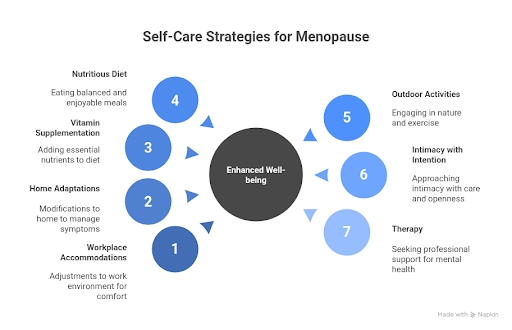
Some of the best ways you can do this with menopause in mind include:
Seek Out Workplace Accommodations
Have you ever heard the phrase “You can’t pour from an empty cup?” As you proceed through menopause, your needs and endurance will likely be more fickle than you recall. It is essential to seek the support you need to avoid burnout and overwork. Consider asking your workplace for reasonable accommodations, such as flexible work hours, alternative work schedules, or modifications to your workspace (e.g., fans and space heaters). Try not to sacrifice your own wellness for the sake of a company’s bottom line.
Adapt Your Home to Your Symptoms
Menopause can come with none, some, or all of the symptoms described above. Depending on which one you are experiencing, adjust your home to support you. If you have hot flashes, consider choosing new sheets that wick away heat. If migraines are a persistent issue, blackout curtains can be a lifesaver.
Stay on Top of Vitamins
Vitamins and minerals keep your body strong and ready to adapt to changes, so make them a part of your daily regimen. Many women are deficient in iron and the B vitamins, especially folate (B9). Ask your doctor to check your levels so you can see exactly what you should be targeting.
Make Food a Treat

Self-care might mean enjoying a cupcake, but it also means taking all your meals seriously. Eating healthfully does not have to mean chewing on bowls of kale (unless you really like kale!). Spend some time creating a pile of recipes that bring you joy and nourish your body so that after a hard day, you have a nutritious and enjoyable variety to choose from.
Get Outside
Stanford University articles report that exposure to natural light and exercise can help you sleep. For women with menopause who are being challenged by insomnia, simply going for a walk can help both your brain and your body fall back into alignment with more comfortable sleep patterns.
Approach Intimacy With Intention
Intimacy often decreases sharply during menopause for many reasons. Other symptoms may leave you feeling disinterested, self-conscious, or simply too tired. Some women experience dryness, pain, or difficulty with pleasure during this time. This means that approaching intimacy with intention, care, sensitivity, and an open mind is essential. Consider making the positive experience more about the path than the destination.
Try Therapy

If emotional and mental health changes are influencing your daily life, therapy can be an invaluable tool during menopause. It can give you the coping tools you need to decrease stress, stay present in your body, avoid emotional and mental spirals, and challenge thought processes that do not serve you.
Don’t Let Menopause Take Over Your Life
If menopause is a looming factor in your life right now, you might not be enjoying your daily routine as much as you want to. The good news is that basic self-care and support from a therapist can make a significant difference. Contact Village Counseling today to try therapy and see how much it can help!